Weekly Market Commentary February 2, 2026

Lee Barczak |

Weekly Market Commentary

February 2, 2026


The Markets


It was a busy, busy week.

If you just looked at the weekly return for the Standard & Poor’s (S&P) 500 Index, you might assume the United States stock market was relatively calm last week. It was not. A lot happened last week – and some news moved markets. Here’s a brief recap:

The Federal Reserve (Fed) held the federal funds rate steady. The Fed’s decision was expected and had little effect on U.S. stock markets. Chair Jerome Powell confirmed ‘the economy is solid, although officials anticipate rates may move lower this year,” reported Christopher Rugaber of the Associated Press.

Overall, companies appear to have done well in the fourth quarter. We are in the midst of earnings season – the time when companies tell investors how they did in the previous quarter. About one-third of S&P 500 companies have reported. For the group overall, it looks like profits improved during the last three months of 2025. “The S&P 500 is now reporting double-digit (year-over-year) earnings growth for the 5th straight quarter,” reported John Butters of FactSet.

Concerns about software companies drove markets lower. While earnings were solid overall, investors were not pleased with reports from software sector. Markets are concerned software firm profits will suffer if artificial intelligence (AI) companies begin to generate their own software. “…[A]nyone hoping earnings season would calm down some of the jitters among software investors has been sorely disappointed. Many software companies have been revising their expectations for future revenue and earnings down,” reported Tracy Alloway and Joe Weisenthal of Bloomberg. Late in the week, software stocks led the market lower.

President Trump chose Kevin Warsh to head the Fed. Investors were reassured by the decision, which they hope will preserve Fed independence. Warsh previously served on the Fed for several years. “The financial markets’ initial reaction to the nomination was modest, suggesting investors are taking it in stride. They can expect a Fed that eases rates in the short term. And if inflation starts to bite, they have reason to hope that Warsh will act, despite Trump’s insistence that the Fed must keep rates low,” reported Matt Peterson of Barron’s.

Major U.S. stock indexes finished the week near where they started it. Yields on U.S. Treasuries finished the week mixed.

S&P 500, Dow Jones Global ex-US, Gold, Bloomberg Commodity Index returns exclude reinvested dividends (gold does not pay a dividend) and the three-, five-, and 10-year returns are annualized; and the 10-year Treasury Note is simply the yield at the close of the day on each of the historical time periods. Sources: Yahoo! Finance; MarketWatch; djindexes.com; U.S. Treasury; London Bullion Market Association. Past performance is no guarantee of future results. Indices are unmanaged and cannot be invested into directly. N/A means not applicable.

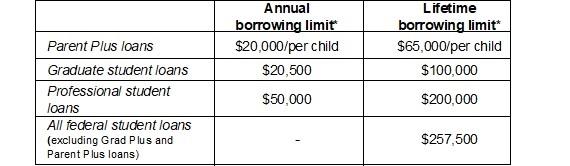
COLLEGE FINANCIAL AID IS CHANGING. More than half of parents in a 2025 survey said they currently save – or plan to save – for their children’s college in tax-advantaged 529 College Savings Plans. That’s a sound plan because the One Big Beautiful Bill Act (OBBBA) made some significant changes that reduce the amount of federal financial aid available to undergraduate and graduate students. It also revised repayment options for parents and students, reported Kamaron McNair of CNBC.

Here are the basics of the revised student lending programs:

·        New borrowing limits. In general, the amounts undergraduate and graduate students can borrow for college were lowered, and so was the amount parents can borrow. In addition, a lifetime borrowing limit was set.

·        Elimination of Grad PLUS loans. Starting July 1, 2026, Grad PLUS loans, which allowed graduate students to borrow up to the full cost of attendance, will no longer be available to new borrowers.

·        Legacy provisions. If an undergraduate or graduate student or a parent borrowed through a Federal Direct Loan program before July 1, 2026, they can continue to borrow from the program under current loan limits for three academic years or until they receive a credential, whichever is less, according to the National Association of Student Federal Aid and Administration (NASFAA).

Here are the basics of the revised repayment options:

·        Repayment plans for new borrowers. For federal student loans made after July 1, 2026, the only repayment options available will be: 1) a new standard repayment plan, or 2) a new income-based repayment (IBR) plan called the Repayment Assistance Plan (RAP). The new program, RAP, requires borrowers to make loan payments of one to 10 percent of their income, with a minimum payment of $10. The repayment period is 30 years.

·        Repayment plans for current borrowers. Anyone who is enrolled in one of the following repayment plans – the Income-Contingent Repayment (ICR), Pay as You Earn (PAYE) or Saving on a Valuable Education (SAVE) plans – can remain in that plan until July 1, 2028. However, they must transition into a different plan – either the current IBR, the current standard plan, or RAP – by that date. If they do not, they will automatically be moved to RAP.

The current IBR plan was changed so borrowers do not need to demonstrate partial financial hardship. In addition, balances of loans repaid may be cancelled after 25 years for current borrowers or 20 years for new borrowers.

Consolidation loans used to pay off Parent PLUS loans must begin repayment before July 1, 2026, to qualify for IBR. As a result, parent borrowers who prefer to have an income-based option for loan repayment should consider consolidating their loans before that date, according to Student Loan Borrower Assistance at the National Consumer Law Center.

·        All loans must be repaid from the same repayment plan.

·        Higher K-12 withdrawal limits for 529 plans. In addition to expanding the “qualifying” education expenses, OBBBA increased the amount that may be withdrawn for qualified primary and secondary school expenses from $10,000 to $20,000.

If you have questions or would like to discuss your college funding plans, please get in touch.


WEEKLY FOCUS – THINK ABOUT IT

“Knowledge is power.”

― Sir Francis Bacon, Philosopher